“What I love about your trilogy is that it’s bold and unapologetic. It’s raw and wounded. Finally… we see the man at the end of the series. And he’s vulnerable... He’s damaged, lost, struggling. We also see what he’s haunted by.”

About the Books
The Violent Season Trilogy is a re-release in three installments of Ray Gleason’s novel, The Violent Season, now out of print. The trilogy relates the stories of three young men and their families during the Vietnam war. The books are a “coming of age” saga that begin in the lush valleys of the Hudson River and in the streets of New York city to provide an insightful perspective of youth and innocence plunged into the crucible of war. The narrative presents a depiction of good people – American and Vietnamese – caught up in grim, unthinkable circumstances. The trilogy is a celebration of the resilience of the human spirit and its ability to triumph over the horror and tragedy of war.



About the Author
Ray Gleason is a medieval scholar and the popular author of the novels, Violent Season Trilogy, the Gaius Marius Chronicles, the Gaius Marius Mysteries, and A Grunt Speaks: A Devil’s Dictionary of Vietnam Infantry Terms.
Gleason received an MA and Ph.D. from Northwestern University where he teaches Medieval Literature. He received a BA in History and English from Hunter College in New York.
Gleason is a decorated, retired, army Ranger officer, who served three combat tours in Vietnam. He recently retired from the Culver Academies where he developed and taught courses in leadership ethics.
Gleason swaps his time between Chicago and northern Indiana with his wife, Jan Peyser, an award-winning silversmith jeweler, and the author of The Opera Cat.

The Gaius Marius Chronicles
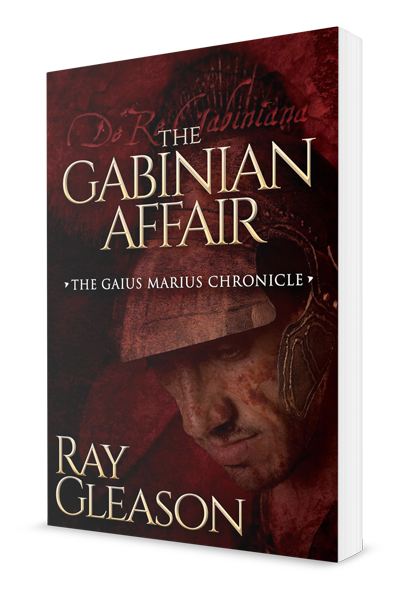
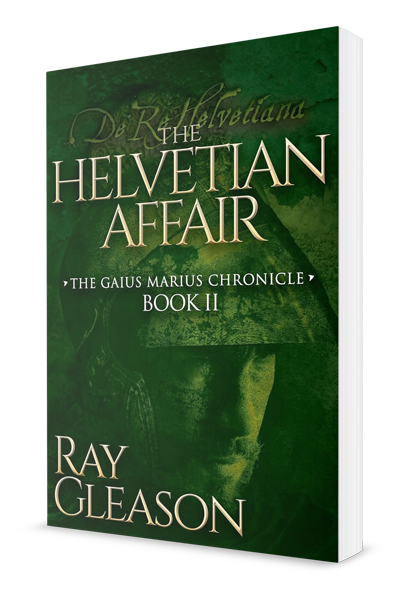
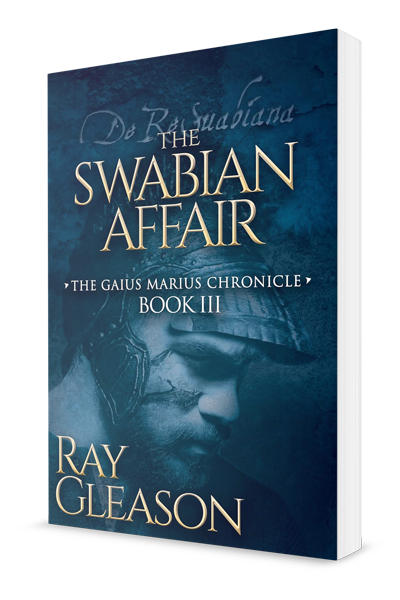
The Gaius Marius Chronicle is the memoir of a retired Roman soldier, Gaius Marius Insubrecus, a legionary who fought with Caesar throughout his Gallic campaigns and the Roman civil wars, and then supported Caesar’s son and heir, Octavius, in his struggles against Caesar’s assassins, and finally against Antony and Cleopatra.
Praise
Latest Essay
The first thing to know about the Roman week is there wasn’t one. During Insubrecus’ times the Romans recognized nundinae, “market days,” which were like a modern one-day weekend during which certain social classes could rest from work. The nundinae were originally market days when farmers brought goods into a settlement; think of modern weekend flea markets. When urban settlements established permanent markets, the nundinae lost their meaning as “market days.” The nundinae were separated by a seven-day period called nundinum forming a recurring cycle.…